Week 2 Blog
Au Vo
DESMA 9
Dr. Vesna
11 April 2024
Week 2 Blog: Mathematics Driving Art
Math and art, at the surface, seem very disconnected and separated from one another. Numbers, drawings, equations, design, they seemingly have nothing to do with each other right?
But upon a deeper analysis, it can be recognized that art is driven by math. The study of mathematics is one of the fundamental concepts behind the notion of perspective that is used in almost every art piece. Marc Frantz explains that perspective and vanishing points are dependent on mathematical thinking and perspectives (Frantz). Furthermore, in his book “The Golden Ratio: The Story of Phi, the World’s Most Astonishing Number”, Mario Livio conveys how the mathematical concept of the golden ratio has been historically and contemporarily used to create balanced and objective beauty in art (Livio). Martin Kemp, in “The Science of Art” elaborates on this idea, discussing how artists from the Renaissance to contemporary times all use scientific methods within their art. He asserts that observations, measurements, and proportionality are both critical in science and art (Kemp).
Leonardo da Vinci’s “Vitruvian Man” and “Mona Lisa” as well as Michelangelo’s Sistine Chapel ceiling exemplify how artists have used mathematics in their magnum opus. The “Vitruvian Man” directly applies the theories about the proportions of the human body. This was only able to be created through Da Vinci’s diligent and meticulous studies in anatomy and mathematics. Da Vinci used theories of math to draw the perfect man such as positioning the navel as the center of a circle that outlines the figure’s body.

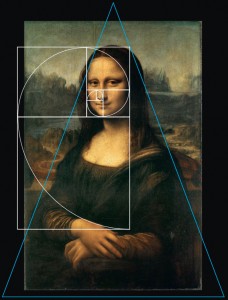
Lastly, Michelangelo's work on the Sistine Chapel ceiling is another example of the integration of mathematics into art. In these pieces, Michelangelo utilized Fibonacci's sequence as well as his understanding of geometry to create a compelling artistic piece. The proportions of the figurers were clearly meticulously planned-just like Da Vinci's "Vitruvian Man." The application of mathematics in the planning and execution of his piece enabled Michelangelo to create advanced, technical artwork.
Works Cited
Frantz, Marc. “Vanishing Points When Looking at Art-.” 2000.
Hello Au!
ReplyDeleteI agree with the recognition that art is driven by math. When I was first taught art, one of the first things I learned was linear perspective and vanishing points. Math provides the fundamentals into creating artworks whether it be shapes, lines, perspective, etc. The examples you provided wonderfully depicts the mathematical concepts that are being used in art. I also agree that the combination of art and math creates a balance of aesthetics and the technical. There is a lot more that is in common between art and math than there is difference. Fantastic blog post!