Event Blog 2
Au Vo
DESMA 9
Dr. Vesna
19 May 2024
Event Blog 2
I attended the LASER Talks event themed “Three Cultures: The Potential for Change When Art, Science, and Policy Meet.” It was an interesting and inspiring experience for me as a Microbiology, Immunology, and Molecular Genetics student. I have not really been exposed to design and arts prior to this class. However, over the past seven weeks, I have come to appreciate the intersection between art and science. This event was moderated by Ingeborg Reichle and she jumped right into the dynamic nexus of these disciplines and their collective potential to drive transformative policy changes, especially in environmental conservation.
This event most definitely aligned with my studies in DESMA 9, where we have been exploring the relationship between scientific processes and artistic expression. The session’s emphasis on the collaboration between art and science to communicate complex data in an impactful manner is in line with our current discussions on neuroscience and art. The discussions emphasized the concept that art is more than just a form of creative expression. Rather, it can also be utilized as a powerful vehicle for scientific communication and advocacy.

The highlight of the event was Kat Austen’s presentation, which exemplified interdisciplinary innovation by putting together scientific data with artistic creativity to influence environmental policies. Her approach of using art to make scientific data emotionally compelling presents a pathway I am eager to explore in my future projects. This method aligns with the goals of my DESMA 9 class, where we are encouraged to create projects that not only reflect artistic skill but also incorporate scientific understanding to communicate broader messages.

This method aligns with the goals of my DESMA 9 class, where we are encouraged to create projects that not only reflect artistic skill but also incorporate scientific understanding to communicate broader messages.
Austen’s work underscored the importance of making scientific data accessible and emotionally engaging to foster a deeper public understanding and drive policy changes. The approach she advocated for is especially relevant to my current studies and future endeavors. I want to continue with my biomedical research, and now, I understand the importance of making data accessible and artistically engaging. DESMA 9 and the coursework most definitely helps with that. For example, this artwork from a research publication that I worked on provides a more general, public-facing overview of the research topic. It is simple and engaging, while also touching on the topic.
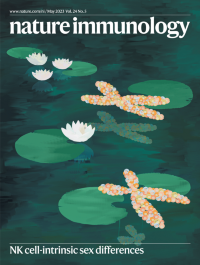
The LASER Talks event has provided me with valuable insights into my field and inspiration to continue exploring the intersection of art, science, and policy in my academic and professional journey.

Works Cited
Arts & Democracy. Arts & Democracy - THE ART OF POLICY CHANGE. (n.d.).
https://artsanddemocracy.org/what-we-do/the-art-of-policy-change/
Banksy. (n.d.). https://www.banksy.co.uk/
Cheng, M. I., Li, J. H., Riggan, L., Chen, B., Tafti, R. Y., Chin, S., Ma, F., Pellegrini, M., Hrncir,
H., Arnold, A. P., O’Sullivan, T. E., & Su, M. A. (2023). The X-linked epigenetic
regulator UTX controls NK cell-intrinsic sex differences. Nature Immunology, 24(5),
780–791. https://doi.org/10.1038/s41590-023-01463-8
Issue ten: Enchantment, disenchantment, Reenchantment. CMA Journal - Simon Fraser
University. (n.d.). Accessed 18 May 2024.
Zaidel, Dahlia W. “Art and brain: insights from neuropsychology, biology and evolution.”
Journal of anatomy vol. 216,2 (2010): 177-83. doi:10.1111/j.1469-7580.2009.01099.x
Comments
Post a Comment